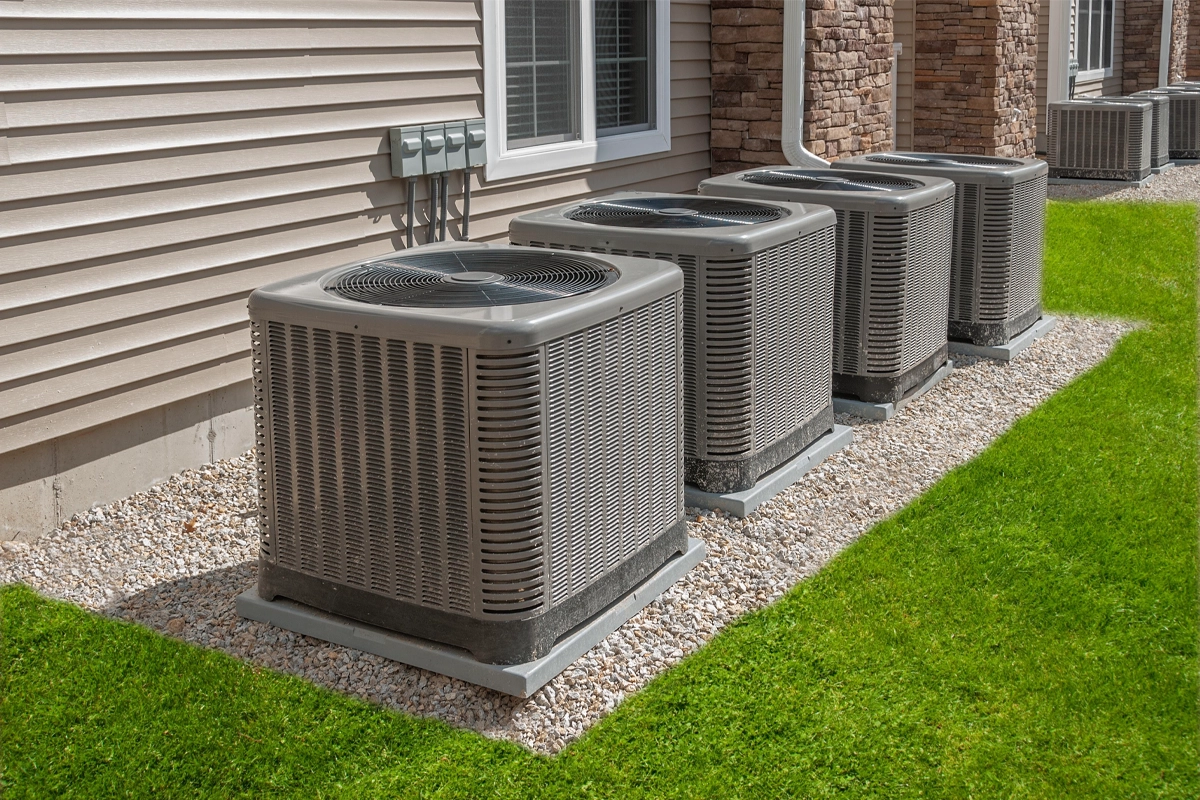
AC

How Long Should an AC Run on a 95-Degree Day in Wichita? What Is Normal and What Is Not in Extreme Heat

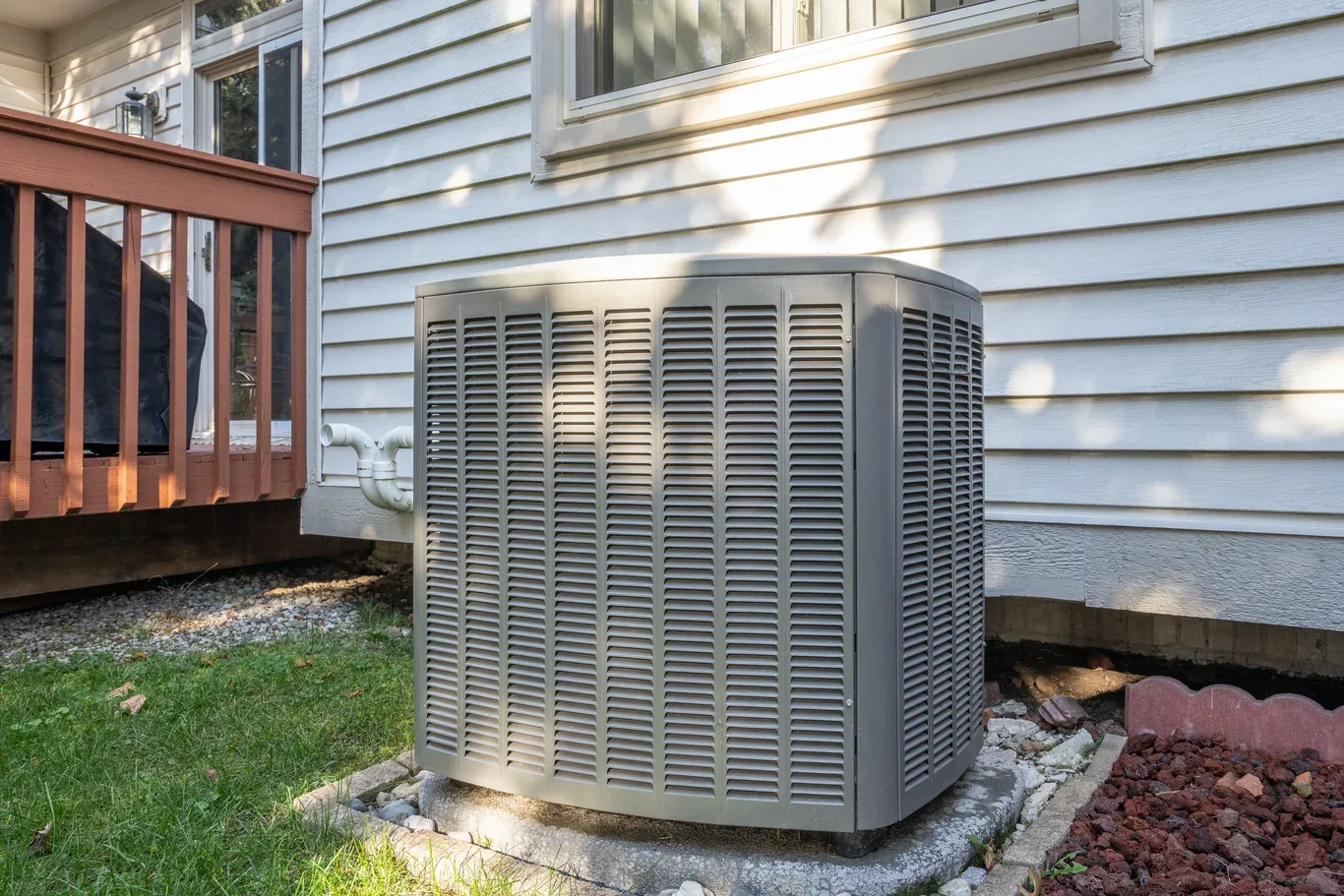
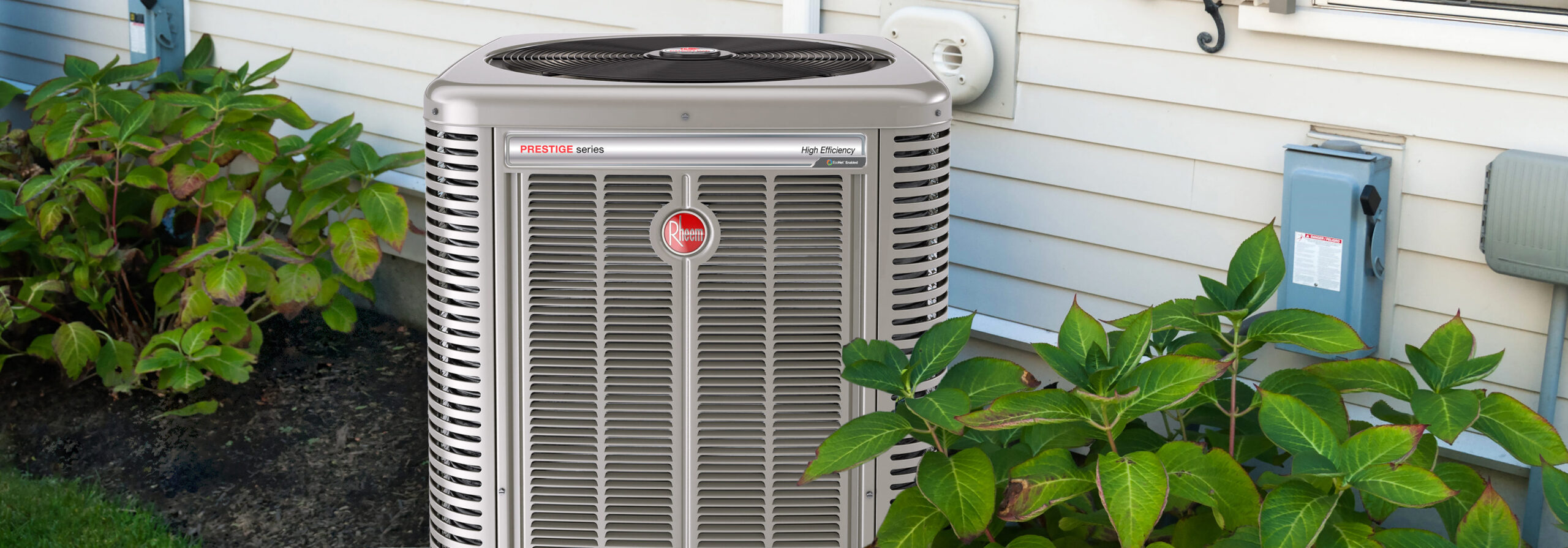
High-efficiency residential air conditioning condenser unit installed outside a home beside a wood deck

On a 95-degree Wichita afternoon, your air conditioner will run longer than usual, and that is expected. Long cycles are normal during extreme heat. Continuous operation without ever reaching the thermostat setting is not. Understanding the difference prevents unnecessary panic on a hot day and helps you identify real system problems that need professional attention.

Normal AC Runtime in Extreme Wichita Heat

On a mild 80-degree day, your AC typically runs 10 to 15 minute cycles, turning on and off several times per hour. On a 95-degree-plus day, expect:

  • Cycles extending to 20 to 40 minutes
  • Near-continuous operation during peak afternoon hours (2 to 6 PM)
  • Indoor temperature running 1 to 2 degrees above setpoint during the hottest hours

Air conditioners are designed to maintain roughly a 15 to 20 degree differential between outdoor and indoor temperatures. On a 98-degree day, holding 78 to 80 degrees indoors is performing well. If the system reaches setpoint during evening hours when outdoor temperatures drop and cycles off normally, your AC is likely fine.

What Should NOT Be Happening

Contact a professional if:

  • The AC runs nonstop overnight (when outdoor temperatures are in the 70s)
  • Indoor temperature keeps climbing despite continuous operation
  • The system never reaches the thermostat setting, even during cooler hours
  • Ice forms on refrigerant lines or the indoor coil
  • Airflow from vents feels noticeably weak

Continuous operation without temperature control indicates a capacity or efficiency problem that will not resolve itself.

Man in a home office holding a cold water bottle to his forehead while overheating from a broken air conditioner

Factors That Affect Runtime in Wichita

  • System Size: Proper sizing requires a load calculation per ASHRAE standards. Undersized systems run constantly and struggle during extreme heat. Oversized systems short cycle and fail to control humidity. Correct sizing balances runtime and comfort. AC replacement projects from Mike Watson Heating & Cooling always begin with a load calculation.
  • Refrigerant Level: Low refrigerant reduces cooling capacity and extends runtime. Symptoms include warm air, ice formation, and hissing sounds. Leaks require professional AC repair before recharging.
  • Condenser Coil Condition: Wichita cottonwood buildup on the condenser reduces heat rejection. Blocked outdoor coils increase runtime, raise electric bills, and stress the compressor. Regular coil cleaning during AC tune-ups prevents this.
  • Home Insulation and Heat Gain: Heat entering through the attic, windows, doors, and crawlspaces adds to the cooling load. Even a properly functioning AC runs longer in a poorly insulated home. ENERGY STAR estimates that air sealing and insulation improvements can reduce cooling costs by up to 15%.
  • System Age: Most air conditioners last 15 to 20 years, per the U.S. Department of Energy. Aging systems lose efficiency progressively. A 15-year-old system running at 10 SEER uses 40 to 60% more energy than a modern 16 to 18 SEER replacement. If your system is 15+ years old and running nonstop, it may be time for a replacement evaluation.

Is It Bad for Your AC to Run Continuously?

Extended runtime during extreme heat is not harmful if:

  • The system reaches setpoint during cooler periods
  • No ice forms
  • Airflow remains strong
  • Electric bill remains proportional to the heat (not wildly disproportionate)

However, if the system is running constantly because of an underlying issue (low refrigerant, dirty coils, aging components), that constant strain accelerates wear and increases the risk of a mid-summer failure. Annual AC maintenance reduces performance decline and catches problems before they cause constant operation.

When to Call for AC Service in Wichita

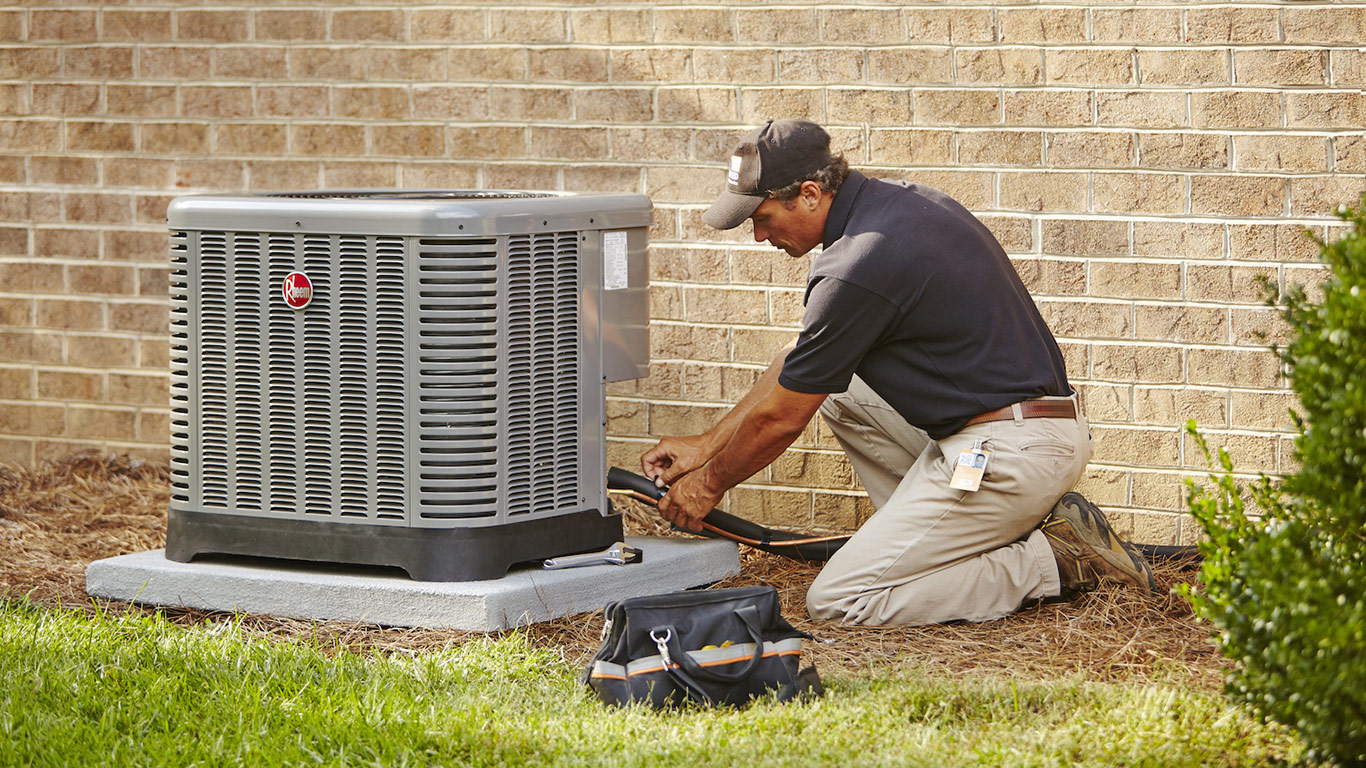
Residential outdoor air conditioner condenser unit installed on a concrete pad beside a home's exterior siding

Call Mike Watson Heating & Cooling if:

  • Indoor temperature keeps climbing despite nonstop operation
  • The AC runs continuously at outdoor temperatures below 90 degrees
  • Breakers trip
  • Ice appears on the system
  • The unit is aging and has not been serviced recently

We serve Wichita, Derby, Andover, Newton, Eastborough, and surrounding communities. View our service area.

Call 316-522-3528 or contact us online.

FAQ: AC Runtime on Hot Days in Wichita

How long should my AC run per cycle on a 95-degree day?

Expect 20 to 40 minute cycles during extreme heat, with possible near-continuous operation during peak afternoon hours. The system should still cycle off during evening and overnight hours.

My AC has been running for 8 hours straight. Is that normal?

During sustained 95-degree-plus heat with high humidity, 6 to 8 hours of near-continuous operation can be normal during the hottest part of the day. If it continues running through the evening as temperatures drop, something is wrong.

Will running my AC constantly damage it?

Not if the system is healthy and the runtime is due to extreme heat. If constant running is caused by low refrigerant, dirty coils, or undersizing, the extra strain accelerates component wear.

Should I raise my thermostat on extremely hot days?

Raising it 1 to 2 degrees can reduce runtime without significant comfort loss. According to Energy.gov, each degree higher saves roughly 3% on cooling energy.

Can ceiling fans help my AC on hot days?

Yes. Ceiling fans create a wind-chill effect that makes rooms feel 3 to 4 degrees cooler, allowing you to raise the thermostat while maintaining comfort. Turn fans off in unoccupied rooms.

Why Is My AC Running Constantly in Wichita?

Summer Heatwave Ac Running

When Continuous Cooling Signals a Problem

On a 95-degree Wichita afternoon, your air conditioner will run longer than usual, and that is completely normal. What is not normal: the system running nonstop without ever reaching the thermostat setting, or running continuously through cooler evening hours when it should be cycling off. If your AC never shuts down, it is either underperforming or overwhelmed, and either scenario costs you money every hour it runs.

When Longer Runtime Is Normal in Wichita

During extreme Kansas heat (95 to 105 degrees), expect:

  • Cooling cycles extending to 20 to 40 minutes
  • The system cycling less frequently (fewer but longer runs)
  • Indoor temperature running 1 to 2 degrees above setpoint during peak afternoon hours

As long as the system eventually reaches your thermostat setting and cycles off, even briefly, it is likely functioning normally. Air conditioners are designed to maintain a 15 to 20 degree differential between outdoor and indoor temperatures.

When Constant Running Means Something Is Wrong

Ac Fan Always Running

Call for an evaluation if:

  • The AC runs nonstop overnight when outdoor temperatures drop to the 70s
  • Indoor temperature keeps climbing despite continuous operation
  • The system never reaches the thermostat setting
  • Ice forms on refrigerant lines or the indoor coil
  • Airflow from vents feels weak

These signs point to a capacity problem, efficiency loss, or mechanical failure.

7 Causes of Constant AC Operation

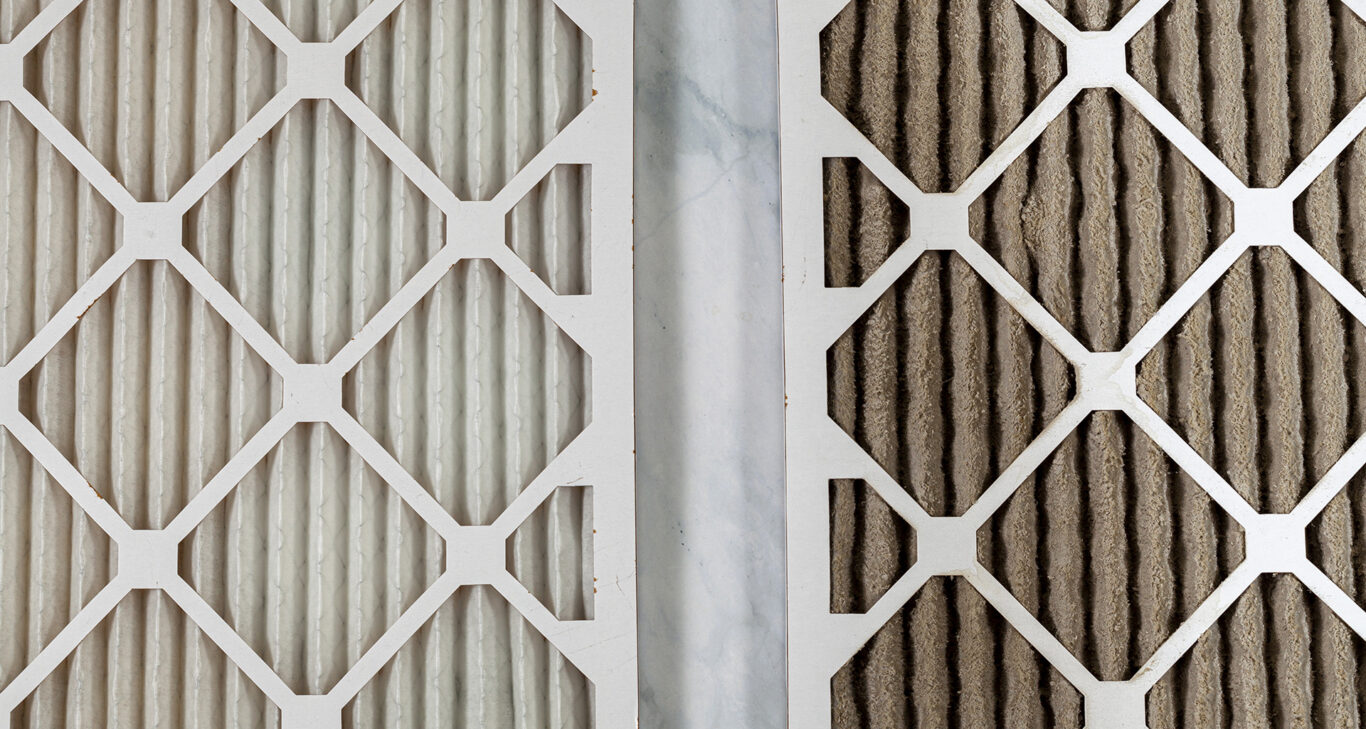
Clean Vs Dirty Ac Filter

1. Dirty Air Filter Restricting Airflow Start here. A clogged filter reduces cooling capacity and forces the system to run longer to compensate. Replace it and see if cycling improves within a few hours.

AC tune-ups include airflow verification and filter assessment.

2. Low Refrigerant (Leak) Refrigerant does not get used up. If levels are low, you have a leak. Low refrigerant reduces cooling output, causes ice formation, and extends runtime. The leak must be repaired before the system can be recharged. Schedule AC repair.

3. Dirty Condenser Coils Wichita cottonwood season coats outdoor units with debris that blocks heat rejection. When the condenser cannot dump heat effectively, the system runs longer, bills climb, and compressor strain increases. Keep the outdoor unit clear and schedule professional coil cleaning.

4. Undersized Air Conditioner If the AC is too small for your home’s cooling load, it may keep up on mild 85-degree days but fall behind on 95-degree-plus days. Proper sizing requires a load calculation, not just matching the old unit’s tonnage. If your system has always struggled during peak heat, it may have been incorrectly sized from installation.

5. Aging System Losing Efficiency Most air conditioners last 15 to 20 years, per the U.S. Department of Energy. As systems age, compressor efficiency declines, coil performance drops, and electrical components weaken. High-efficiency modern systems reduce energy use by 20 to 50% compared to older units. If your system is 15+ years old and running nonstop, replacement evaluation makes sense.

6. Poor Insulation or Air Leaks Cooled air escaping through attic gaps, drafty windows, and poor door seals forces constant operation. The AC may be functioning correctly but unable to overcome structural heat gain. This is common in older homes throughout College Hill, Riverside, and Delano. ENERGY STAR estimates duct and envelope leaks can waste 20 to 30% of conditioned air.

7. Thermostat Issues Improper thermostat placement can cause false temperature readings. If the thermostat is in direct sunlight, near kitchen heat, or next to a supply vent, it may signal continuous cooling because it reads the room as warmer than it actually is. Calibration or relocation may resolve this.

Does Continuous Operation Increase Damage Risk?

Yes. Extended nonstop operation increases:

  • Compressor wear and overheating risk
  • Electrical component failure
  • Energy consumption (your Evergy bill during an extended run can be shocking)

Constant strain accelerates system decline, especially on equipment that is already aging. Addressing the root cause sooner reduces both repair costs and energy waste.

When to Call for AC Service

Contact Mike Watson Heating & Cooling if:

  • Your system runs constantly in moderate heat (below 90 degrees outdoor)
  • Indoor temperature never stabilizes at the setpoint
  • Your electric bill has spiked unexpectedly
  • Ice forms on the system
  • The unit is over 15 years old

We provide AC repair and system evaluation throughout Wichita, Derby, Andover, Newton, Eastborough, and surrounding communities.

Our services include: – AC repair with 24/7 emergency availability – AC replacement with proper load calculation – AC tune-ups – Furnace repair and heating services – Zone control systems and ductless mini-splits – Indoor air qualitysolutions

View our service area or call 316-522-3528 to schedule an inspection.

FAQ: AC Running Constantly in Wichita

Is it normal for my AC to run all day in 100-degree heat?

Extended cycles and near-continuous operation during extreme heat is normal as long as the system reaches the thermostat setting during cooler periods (evening, overnight). If it never cycles off, even when outdoor temperatures drop, there is a problem.

Can a constantly running AC increase my electric bill significantly?

Yes. An AC that runs 24 hours instead of the normal 12 to 16 hours doubles your daily cooling energy cost. Over a month of extreme heat, that can add $150 to $300+ to your Evergy bill.

Should I turn off my AC if it won’t stop running?

If the system is forming ice, yes; turn it off to prevent compressor damage. Otherwise, raising the thermostat a few degrees may allow the system to cycle normally while you wait for a professional evaluation.

Could my AC be too small for my house?

Yes. Undersized systems are one of the most common causes of constant running during peak heat. A load calculation determines whether your system matches your home’s cooling demand. ASHRAE standards define the proper methodology.

When should I replace an AC that runs constantly?

If the system is over 15 years old, the root cause is declining efficiency (not a single fixable component), and repair costs are mounting, replacement typically provides better long-term economics than continued operation.

AC Capacitor Failure in Wichita: Symptoms, Causes, and What to Expect from Repair

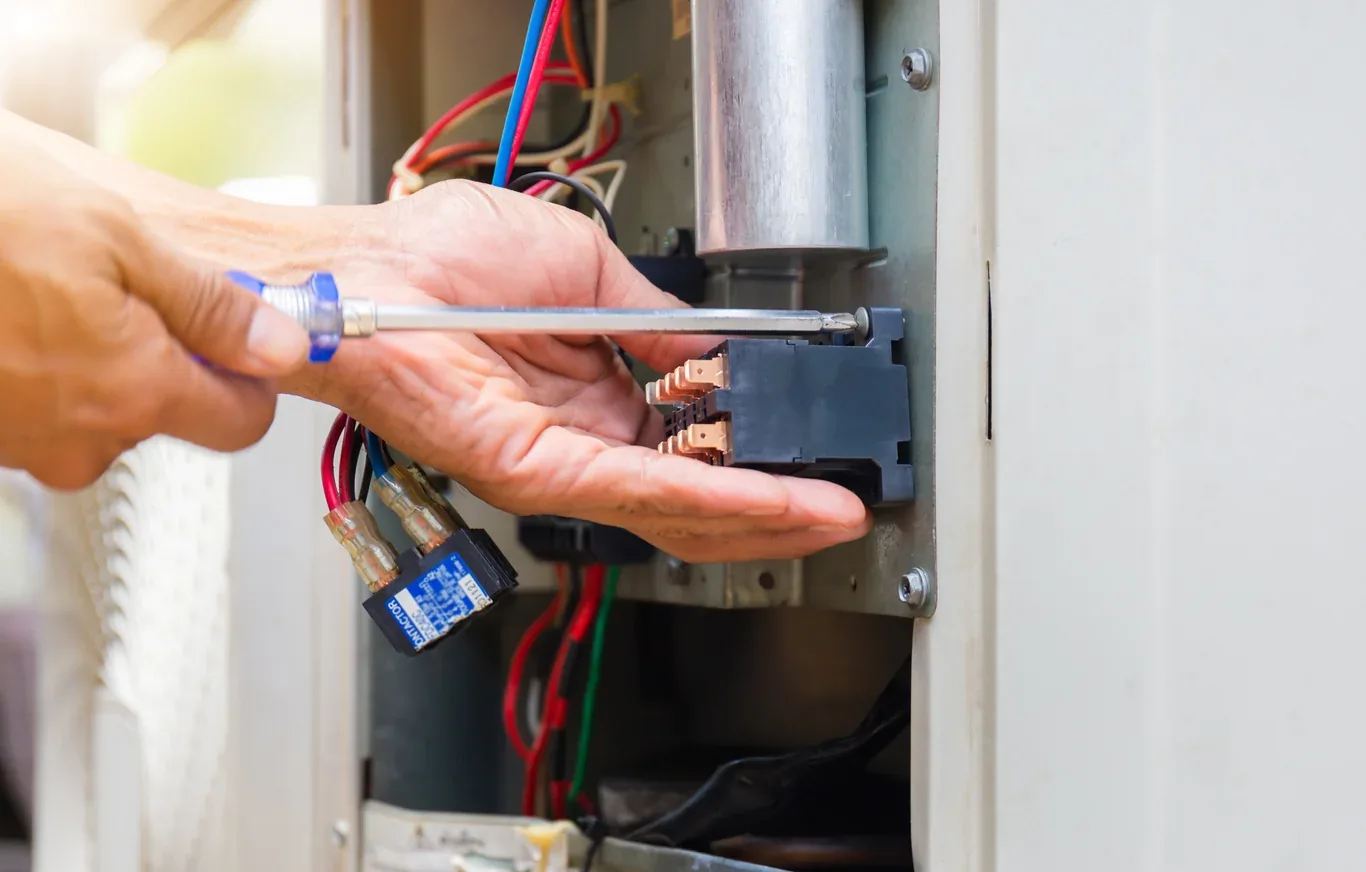
Technician repairing an air conditioner contactor and capacitor

If your air conditioner hums but will not start, a failed capacitor is the most likely cause. Capacitors store and deliver the electrical charge your compressor and fan motor need to start and run. In Wichita’s peak summer heat, capacitor failure is the single most common AC breakdown, and it is one you should not ignore because delaying repair puts your compressor at risk.

What Does the AC Capacitor Do?

The capacitor serves two critical functions:

  • Start capacitor: Provides the initial electrical surge to start the compressor motor
  • Run capacitor: Maintains consistent voltage to the compressor and fan motor during operation

Without a functioning capacitor, the compressor cannot start. The fan motor may also fail to spin. Your AC becomes an expensive metal box that hums.

Signs of a Failing AC Capacitor

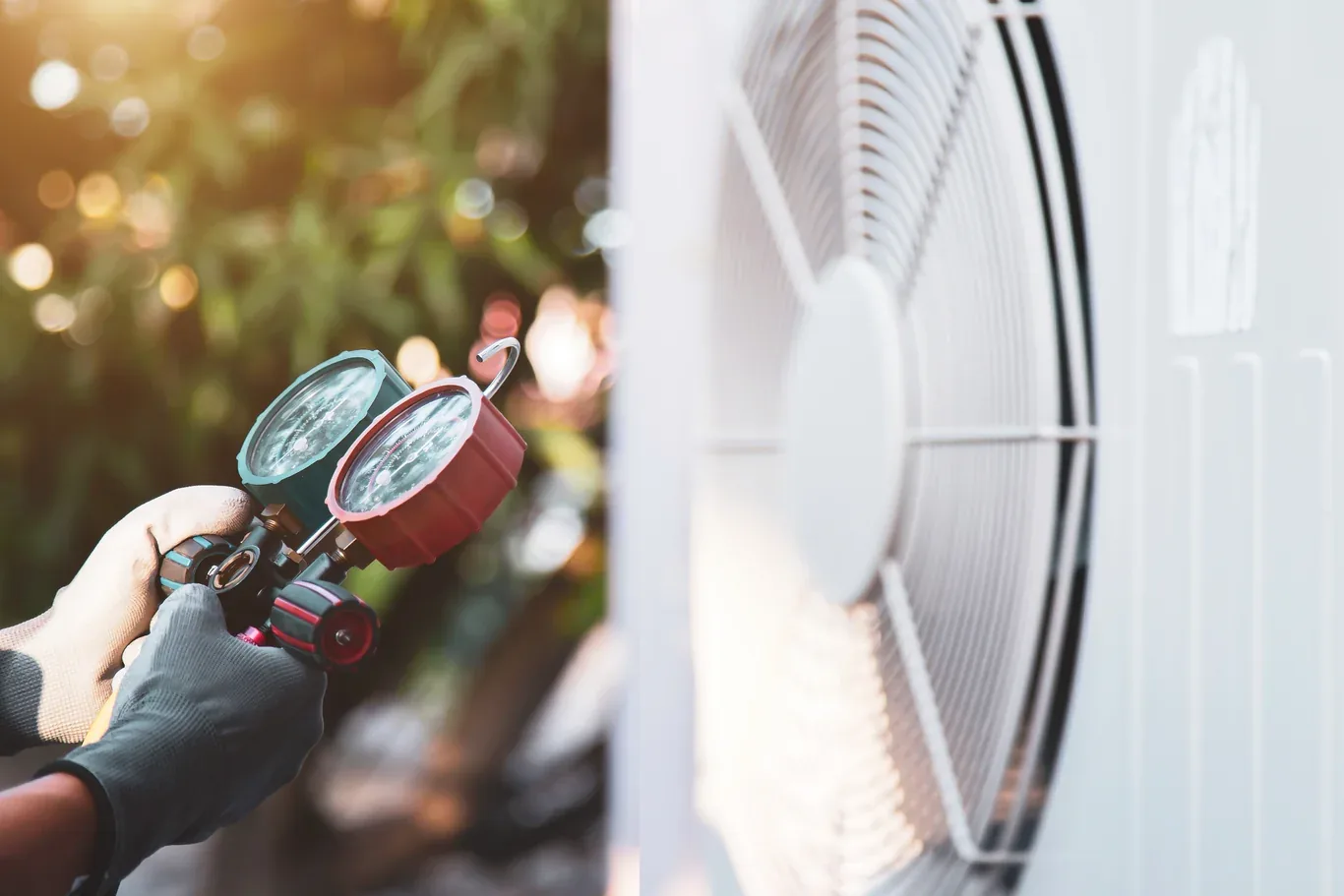
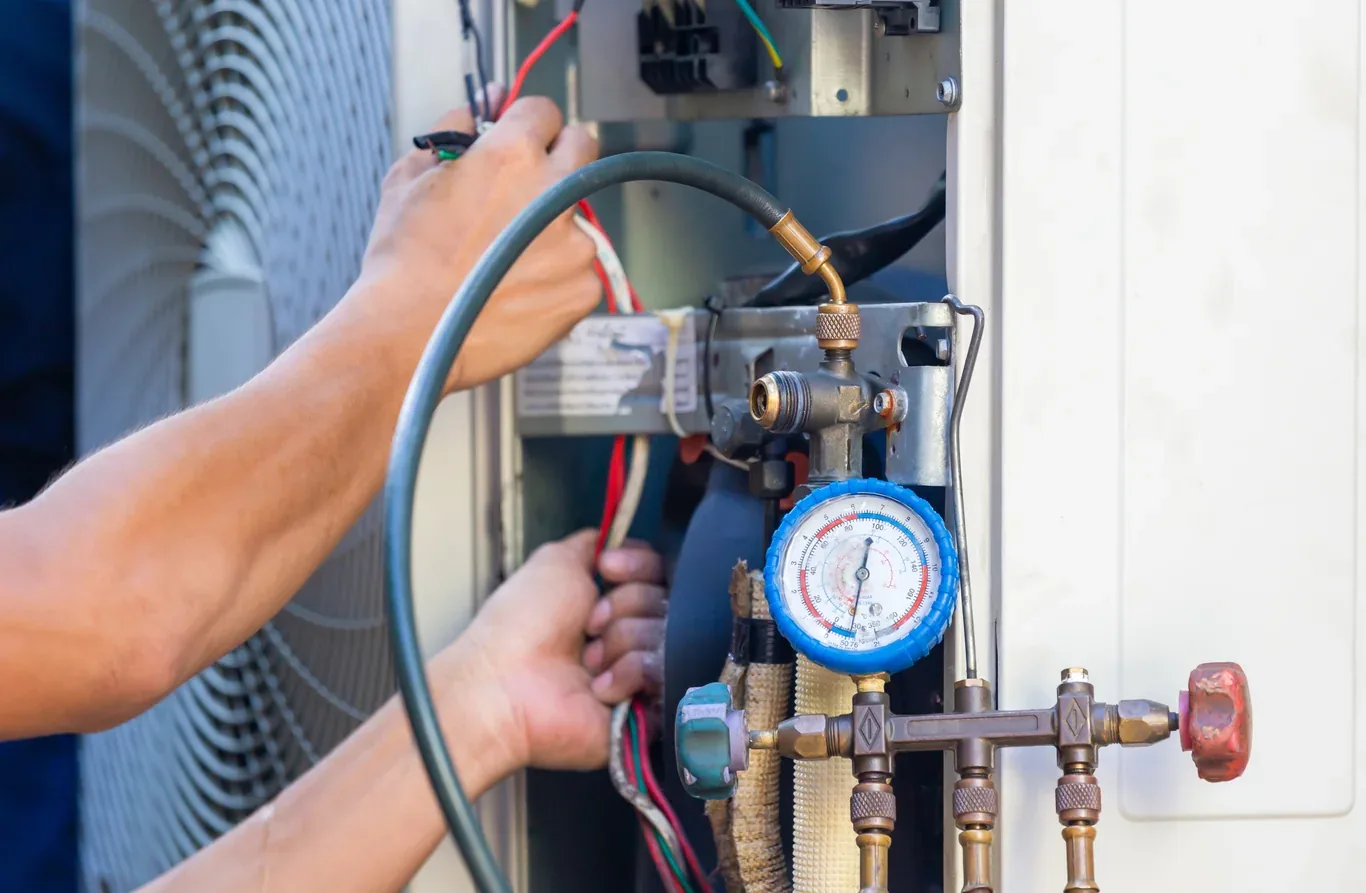
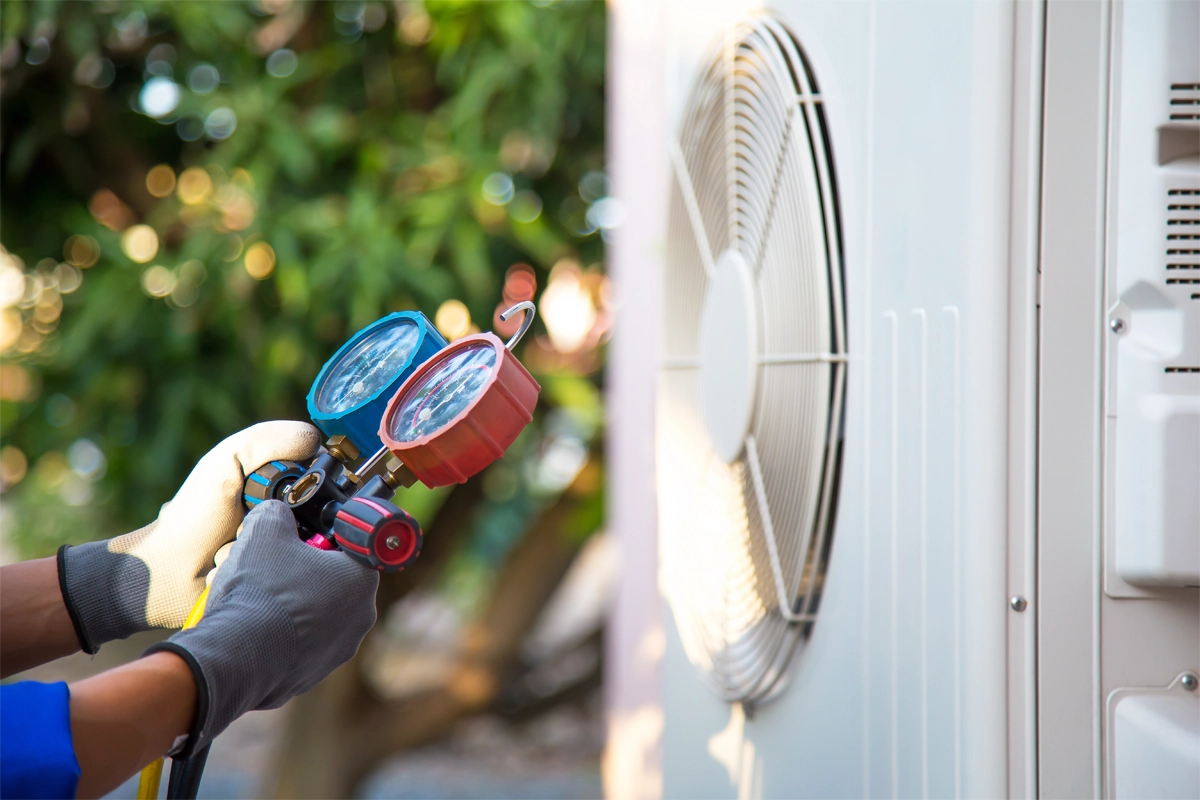
Technician measuring refrigerant with manifold gauges on an air conditioner

Watch for these symptoms, especially during the first sustained heatwave of Wichita’s summer:

  • Outdoor unit humming loudly but not starting
  • Condenser fan not spinning (you may be able to see the still fan through the top grille)
  • AC starting intermittently (works sometimes, fails other times)
  • System shutting off within seconds of starting
  • Breaker tripping occasionally when the AC attempts to start

If you hear humming and the fan does not move, shut the system off immediately. Running a compressor without a functioning capacitor forces it to overheat and can cause permanent damage.

Why Capacitors Fail During Wichita Summers

Extreme heat is the primary accelerant. High outdoor temperatures combined with long daily run cycles:

  • Stress the capacitor’s internal components
  • Increase voltage demand
  • Shorten dielectric lifespan
  • Push aging components past their tolerance

Kansas summers, with sustained 90-degree-plus heat and 12 to 16 hour daily cooling demands, create exactly the conditions that kill capacitors. According to ASHRAE, electrical component testing should be part of annual preventive maintenance.

What Happens If You Ignore a Failing Capacitor?

A weak capacitor forces the compressor to attempt harder startups, which:

  • Overheats compressor windings
  • Increases electrical draw
  • Can melt wiring insulation
  • Leads to compressor failure ($1,200 to $2,800+)

A $200 capacitor repair prevents a $2,000+ compressor replacement. This is one of the clearest cost-benefit calculations in HVAC service.

Can You Replace a Capacitor Yourself?

No. Capacitors store electrical charge even after the system is powered off and disconnected. Touching a charged capacitor can cause serious electrical injury.

Professional repair includes:

  • Safe discharge of the old capacitor
  • Correct microfarad rating verification (using the wrong capacity damages the compressor)
  • Proper installation and connection
  • System testing after replacement

Electrical diagnostics are part of every AC repair visit from Mike Watson Heating & Cooling.

Capacitor Repair vs. System Age

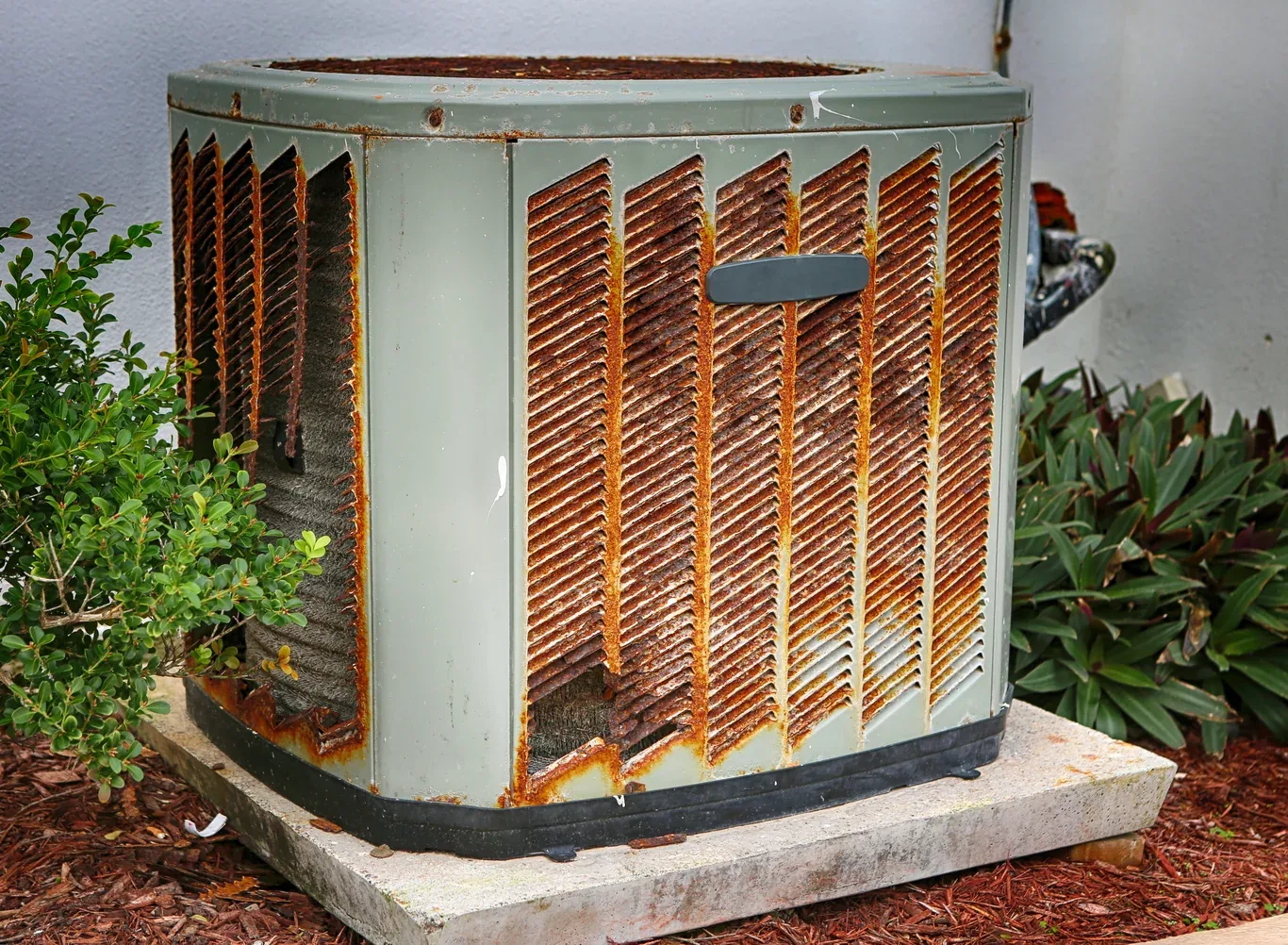
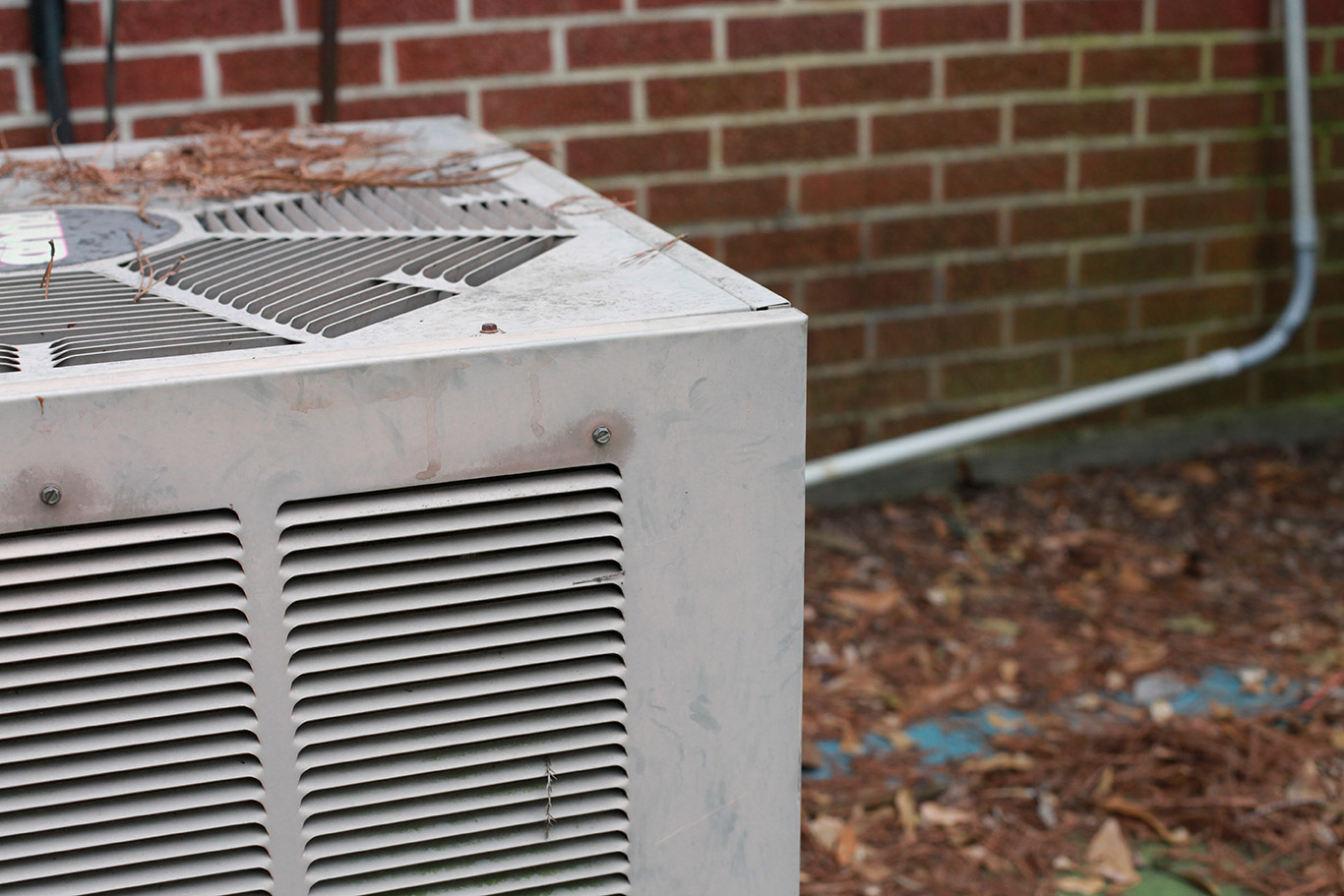
Aging, rusted air conditioner condenser unit needing replacement
System AgeCapacitor FailureRecommended Approach
Under 10 yearsRoutine repairReplace capacitor; standard maintenance item
10 to 15 yearsEvaluate overall conditionReplace capacitor, but monitor for other declining components
15+ yearsConsider long-term strategyReplace capacitor if cost-effective, but get a replacement estimate

Repeated electrical failures on aging systems often signal broader decline. A single capacitor replacement on a 17-year-old system is reasonable. A second capacitor plus a contactor plus a fan motor in the same summer suggests the system is reaching end of life.

Most air conditioners last 15 to 20 years, per the U.S. Department of Energy. Modern high-efficiency replacements reduce energy use by 20 to 50% compared to older equipment.

Preventing Capacitor and Electrical Failures

  • Schedule annual AC tune-ups (includes capacitor strength testing with a multimeter)
  • Keep condenser coils clean (reduces runtime and heat stress)
  • Replace air filters regularly (reduces system strain)
  • Address humming noises immediately (do not wait for complete failure)
  • Keep the area around the outdoor unit clear for proper airflow

Annual maintenance is the most effective way to catch weakening capacitors before they fail during the hottest week of the year.

Wichita AC Repair Services

Mike Watson Heating & Cooling provides: – AC repair with same-day capacitor replacement availability – AC tune-ups with electrical component testing – AC replacement when repair is not cost-effective – Furnace repair and furnace replacement – Indoor air quality solutions – Thermostat installation and configuration

Licensed technicians serve Wichita, Derby, Andover, Newton, Eastborough, and surrounding communities. View our service area.

Call 316-522-3528 or schedule repair online.

FAQ: AC Capacitor Failure in Wichita

How much does an AC capacitor replacement cost in Wichita?

Capacitor replacement typically costs $150 to $300 including parts and labor. This is one of the most affordable and most common summer AC repairs.

How long does a capacitor last?

Capacitors typically last 10 to 20 years, but Wichita’s extreme summer heat can shorten that lifespan. Annual testing during AC maintenance catches weakening capacitors before they fail.

Can I tell if my capacitor is bad by looking at it?

Sometimes. A visibly swollen, bulging, or leaking capacitor is clearly failed. However, many failing capacitors look normal externally but have lost significant electrical capacity. Only multimeter testing reveals the actual condition.

Why does my AC hum but not turn on?

A humming outdoor unit with no fan movement is the classic symptom of capacitor failure. The motor is receiving power but cannot get the electrical boost needed to start. Shut the system off and call for repair. Per ENERGY STAR, operating equipment with known electrical faults risks further damage.

Is capacitor failure covered by warranty?

Most manufacturer warranties cover compressors and major components but may not cover capacitors beyond the first year. Extended warranty or maintenance agreements may provide additional coverage. Check your specific warranty terms or ask during your next service visit.

Sources:

Why Does My AC Smell Musty in Wichita? What That Damp Odor Means for Your System

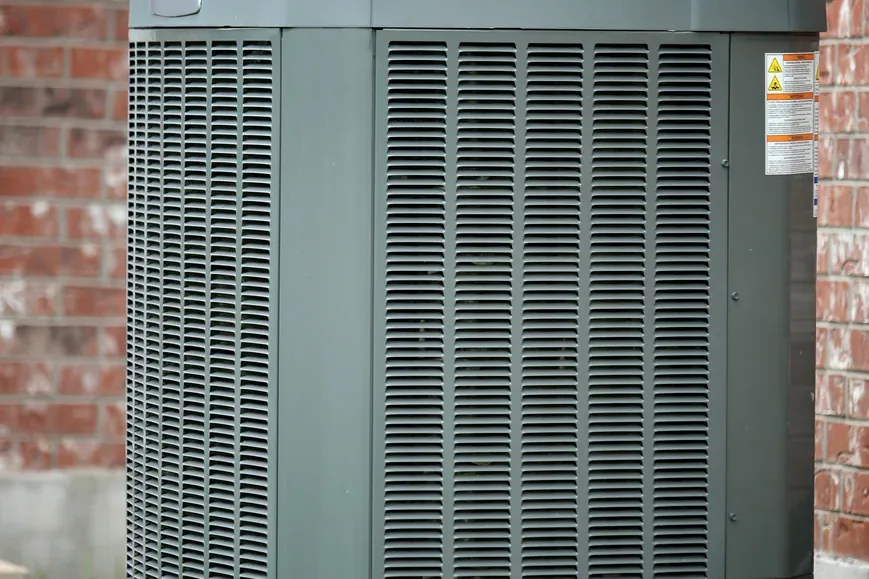
Residential air conditioner condenser beside a brick home

If your air conditioner smells musty or damp when it turns on, moisture is collecting somewhere it should not be. In Wichita’s humid summer conditions, biological growth inside the HVAC system (mold, mildew, bacteria on wet surfaces) is more common than most homeowners realize. That musty smell is not normal, and it is not just unpleasant; it signals drainage problems, airflow issues, or equipment that needs professional cleaning.

Cause #1: Clogged Condensate Drain Line (Most Common)

Your air conditioner removes humidity from indoor air. That moisture collects on the evaporator coil and drains through a condensate line to the outside or a floor drain.

When the drain line clogs (from dust, algae, or debris):

  • Water backs up in the drain pan
  • Standing moisture develops
  • Mold and mildew grow on wet surfaces
  • The musty odor circulates through your ductwork into every room

This is the number one cause of musty AC smell in Wichita homes. Annual AC tune-ups include condensate drain flushing specifically to prevent this.

Cause #2: Dirty Evaporator Coil

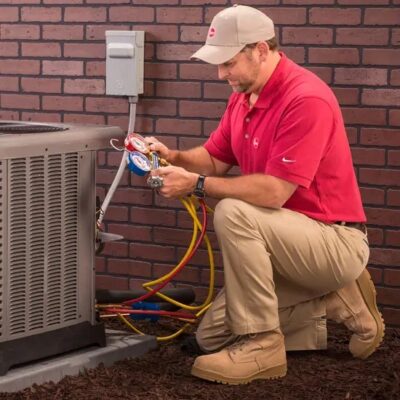
HVAC technician using refrigerant manifold gauges on an AC system

The indoor evaporator coil stays cold and damp during operation. Over time, dust accumulation combines with that moisture to create conditions for mold growth.

If the coil is contaminated:

  • Musty odor appears when the AC first starts a cycle
  • Airflow may weaken
  • Cooling performance may decline

Professional coil cleaning restores both airflow and air quality. This is not a DIY task; the evaporator coil requires specialized cleaning products and access.

Cause #3: Wet or Saturated Air Filter

A dirty filter that collects moisture becomes a breeding ground for mildew. The damp filter then distributes odor through the entire HVAC system.

Replace the filter immediately if:

  • It looks damp or discolored
  • It smells musty when you pull it out
  • It has been in place for more than 60 days during summer

During Wichita’s humid months (June through September), check your filter monthly.

Cause #4: Oversized AC and Short Cycling

Oversized systems cool air too quickly and shut off before running long enough to remove adequate moisture. Short cycles leave the coil, drain pan, and ductwork damp, which encourages biological growth over time.

If your system has always produced musty smells during summer, oversizing may be a contributing factor. Proper sizing during AC replacement can resolve chronic humidity and odor issues.

Cause #5: Duct Contamination

If your ductwork contains dust buildup, moisture intrusion, or biological growth, odors circulate throughout every room in the house.

Signs of duct issues:

  • Musty smell in multiple rooms simultaneously
  • Visible dust or discoloration around vent registers
  • Odor that persists despite filter changes and coil cleaning

Duct inspection identifies distribution-related odor sources. Indoor air quality assessments can determine whether duct cleaning or remediation is needed.

Cause #6: High Indoor Humidity

When indoor humidity stays above 55 to 60%, the entire HVAC system (coils, drain pans, ductwork, filter) remains wetter than designed. The EPA recommends maintaining indoor humidity between 30% and 50%.

If your AC cannot maintain those levels, a whole-home dehumidifier controls moisture independently of the cooling cycle, reducing odor, mold risk, and allergen levels.

When Musty Smell Signals Replacement

Residential air conditioner unit installed beside a house

Most air conditioners last 15 to 20 years. If your system is over 15, experiences repeated moisture issues, and struggles to control humidity, the root cause may be declining equipment performance.

Modern high-efficiency systems with variable-speed operation run longer, gentler cycles that remove more moisture. AC replacement can resolve persistent odor and efficiency problems simultaneously.

What to Do Right Now If You Smell Mold

If the odor is strong and persistent:

  • Turn the system off
  • Replace the air filter
  • Check for visible standing water near the indoor unit
  • Do not attempt to clean internal coils without proper equipment
  • Schedule a professional evaluation

Mike Watson Heating & Cooling provides AC maintenance with coil cleaning and drain service to address the root cause, not just the symptom.

Wichita AC and Indoor Air Quality Services

Our services include: – AC tune-ups with coil cleaning and drain flushing – AC repair and AC replacement – Indoor air quality assessment and solutions – Air purifier installation – Humidifier/dehumidifier installation – Furnace repair and heating services – Thermostat installation

Licensed technicians serve Wichita, Derby, Andover, Newton, Eastborough, College Hill, Riverside, and surrounding communities. View our service area.

Call 316-522-3528 or schedule service online.

FAQ: Musty AC Smell in Wichita

Why does my AC smell musty only when it first turns on?

The initial musty burst typically comes from mold or mildew that grew on the evaporator coil or in the drain pan during the off cycle. Once airflow begins, the odor circulates through the ducts. Professional coil cleaning eliminates the source.

Can a musty AC smell make you sick?

Mold and mildew spores can trigger allergic reactions, respiratory irritation, and asthma symptoms. The EPA identifies indoor mold as a significant health concern, especially for children, elderly individuals, and those with respiratory conditions.

How do I prevent musty AC smell?

Schedule annual AC maintenance that includes condensate drain flushing and coil inspection. Replace filters monthly during summer. Consider a whole-home dehumidifier if indoor humidity consistently exceeds 55%.

Will an air purifier help with musty AC smell?

An air purifier can reduce airborne mold spores and improve indoor air quality, but it does not address the source of the odor (wet coil, clogged drain, dirty ductwork). Fix the source first, then consider air purification for ongoing air quality improvement.

How much does it cost to fix a musty AC smell?

If the cause is a clogged drain line (cleared during a tune-up), the cost is typically $89 to $175. If the evaporator coil needs professional cleaning, expect $150 to $400. Duct cleaning, if needed, ranges from $300 to $600 depending on system size.

Sources:

Why Is My AC Freezing Up in Wichita? 

Wichita Ac Installation

What Ice on Your Air Conditioner Really Means

If you see ice on your air conditioner in the middle of a Wichita summer, something is wrong. Air conditioners remove heat; they do not create ice. Frozen coils signal airflow restrictions or refrigerant problems, and ignoring the buildup risks permanent compressor damage. Here is what causes it, what to do right now, and when you need professional help.

Ice commonly appears in three places:

  • The refrigerant line outside (the copper pipe running from the outdoor unit into your home)
  • The indoor evaporator coil (inside the air handler or on top of the furnace)
  • The outdoor unit itself (in severe cases)

If ice is visible anywhere on the system, shut it off immediately. Running a frozen system forces the compressor to work against a blocked coil, which can cause catastrophic failure.

Cause #1: Dirty Air Filter (Start Here)

Restricted airflow is the most common cause of AC freeze-ups in Wichita, and it is the easiest to fix yourself. When the filter is clogged:

  • Airflow across the evaporator coil drops
  • Coil temperature falls below freezing
  • Moisture in the air condenses and freezes on the coil
  • Ice accumulates and blocks airflow entirely

Replace the filter immediately. This single step resolves freeze-ups more often than any other fix. Regular AC tune-ups include airflow inspection and coil cleaning to prevent this from happening during peak cooling season.

Cause #2: Low Refrigerant (You Have a Leak)

Refrigerant does not get used up. If levels are low, a leak exists somewhere in the system. Low refrigerant pressure reduces the evaporator coil temperature excessively, causing ice formation even with adequate airflow. The leak must be located and repaired before the system is recharged. Simply adding refrigerant without fixing the leak means the ice will return. Learn more about refrigerant issues and AC repair.

Cause #3: Blocked or Closed Vents

Closing too many supply vents in unused rooms feels like a smart energy-saving move, but it actually restricts airflow and increases static pressure across the coil. Keep all vents open during cooling season, even in rooms you do not use often. Homes in College Hill and Riverside with older floor plans are especially prone to this issue due to limited return air pathways. For targeted temperature control without closing vents, consider a zone control system or ductless mini-split.

Cause #4: Blower Motor Problems

If the blower motor is weak, failing, or running intermittently, airflow drops across the coil and freeze risk increases. Signs of blower motor trouble:

  • Weak airflow from vents even with a clean filter
  • Unusual sounds from the indoor unit
  • Inconsistent air volume

This requires professional diagnosis. Blower motor issues affect both your air conditioning and heating performance.

Cause #5: Dirty Evaporator Coil

Years of dust buildup on the indoor coil creates an insulating layer that restricts heat transfer. The coil gets colder than designed, moisture freezes, and the cycle continues. Evaporator coil cleaning is part of professional AC maintenance and cannot be done effectively with household tools.

What to Do Right Now If Your AC Is Frozen

  1. Turn the system completely off
  2. Set the fan to “On” (not “Auto”) to circulate warm air over the coil
  3. Allow a full thaw; this may take 2 to 4 hours
  4. Replace the air filter while waiting
  5. Once fully thawed, restart the system

If freezing returns within 24 hours, there is an underlying issue that requires professional AC repair.

Can a Frozen AC Drive Up Your Energy Bills?

Absolutely. According to Energy.gov, cooling already accounts for a significant portion of summer electricity costs in Kansas. A frozen system forces:

  • Dramatically longer runtime with zero effective cooling
  • Higher electrical consumption per hour
  • Compressor stress that accelerates wear

High-efficiency systems can reduce energy use by 20-50% compared to older equipment, but those gains disappear entirely when coils are frozen.

When Replacement Makes More Sense Than Repair

Most air conditioners last 15-20 years. If yours is over 15 and experiencing repeated freeze-ups, frequent refrigerant issues, and declining performance, the repair costs are likely stacking up faster than the system can justify. AC replacement with a properly sized, modern system eliminates chronic freeze-ups and reduces energy costs at the same time.

Wichita AC Repair and Maintenance Services

Licensed technicians serve Wichita, Derby, Andover, Newton, Eastborough, Maize, Goddard, Park City, and surrounding communities. View our service area.

Call 316-522-3528 or schedule service online.


Why does my AC freeze up at night but not during the day? 

Nighttime temperatures are lower, so the already-reduced coil temperature from a dirty filter or low refrigerant drops below freezing more easily at night. The underlying cause is the same; it just manifests first during cooler operating conditions.

Can I use a hair dryer to thaw my frozen AC? 

Do not apply direct heat to the coil. This can damage components and create a safety hazard. The safest thawing method is turning off cooling, setting the fan to “On,” and allowing natural air circulation to melt the ice.

How quickly can a frozen AC damage the compressor? 

Compressor damage from frozen operation can begin within hours if the system runs continuously against a blocked coil. The ASHRAE recommends shutting down immediately when ice is detected.

Will a new air filter fix my frozen AC? 

If the freeze was caused by a dirty filter alone, yes. Replace the filter, allow a full thaw, and restart. If the ice returns, the problem is deeper (likely refrigerant or blower motor related) and requires professional repair.

How much does it cost to fix a frozen AC in Wichita? 

Costs range widely. If a dirty filter caused it, the fix is under $20. Refrigerant leak repair and recharge runs $400 to $1,500+. Blower motor replacement is typically $400 to $900. Your technician will diagnose the root cause before quoting a repair.

How Much Does AC Repair Cost in Wichita, KS? 

Wichita Ac Repair

What Actually Affects the Price?

When your air conditioner breaks down in Wichita, the first priority is getting cool air back. The second is knowing what the repair will cost before you approve the work. There is no single flat rate for AC repair because failures range from a $175 capacitor swap to a $2,500 compressor replacement. Here is what actually drives the price, so you can make informed decisions instead of stressed ones.

Seven factors influence what you will pay:

  1. Type of failure (electrical, mechanical, or refrigerant)
  2. System age and condition
  3. Refrigerant type (older R-22 systems cost more to service)
  4. Labor time required
  5. Part availability (common parts vs. special order)
  6. Emergency vs. scheduled timing
  7. Equipment accessibility

A capacitor replacement is not priced like a compressor failure. Understanding the difference helps you evaluate whether a repair makes financial sense for your system.

Common AC Repairs and Typical Cost Ranges in Wichita

Repair TypeTypical Cost RangeNotes
Capacitor replacement$150 to $300Most common summer repair; short labor time
Contactor replacement$175 to $400Electrical component; usually quick repair
Refrigerant leak repair + recharge$400 to $1,500+Varies by leak severity and refrigerant type
Blower motor replacement$400 to $900Indoor component; affects airflow
Compressor replacement$1,200 to $2,800+Major repair; often triggers replacement discussion
Evaporator coil replacement$800 to $2,000+Labor-intensive; age-dependent decision

These ranges reflect Wichita-area pricing. Your actual cost depends on your specific system and situation. For a precise diagnosis, schedule an AC repair visit.

Emergency vs. Scheduled Repair Pricing

Mike Watson Heating & Cooling provides 24/7 emergency AC repair throughout Wichita, including nights, weekends, and holidays. Emergency timing can influence total cost due to:

  • After-hours dispatch logistics
  • Extreme heat demand during peak summer
  • Higher call volume in July and August.

Scheduling preventive maintenance each spring catches failing components before they cause a mid-summer emergency. That $150 tune-up can prevent a $500+ emergency visit.

System Age Changes the Repair Calculation

Most central air conditioners last 15 to 20 years with consistent maintenance, per the U.S. Department of Energy. If your system is over 15 years old and facing a major repair:

  • Efficiency has already declined
  • More components are likely to fail soon
  • Refrigerant costs may be higher (especially R-22 systems)
  • Replacement may provide better 5-year economics

Modern high-efficiency systems reduce energy use by 20 to 50% compared to older units. In Wichita’s long cooling season, that efficiency gap becomes real money on your Evergy bill.

The Repair vs. Replace Threshold

Here is the guideline most honest HVAC professionals use:

  • If the repair cost approaches 40-50% of replacement value, replacement usually makes more financial sense.
  • This threshold matters most when:
    • The compressor fails on a 15+ year old system
    • The refrigerant system is compromised (coil leak + recharge)
    • You are facing your second or third major repair in two years
  • Stacking repairs on aging equipment increases total lifecycle cost. Each repair buys less remaining life from the system.

How to Reduce Your AC Repair Costs Over Time

  • Schedule annual AC tune-ups every spring
  • Replace air filters monthly during cooling season
  • Keep 2 to 3 feet of clearance around the outdoor unit
  • Clear cottonwood debris from condenser coils (a Wichita essential)
  • Address small issues before they become big ones
  • Monitor your system’s age and repair history

Seasonal maintenance identifies capacitors losing strength, refrigerant pressure dropping, and coils getting dirty before those issues cause a no-cool emergency during a Wichita heatwave.

Mike Watson Ac Repair Schulte Ks

What Is Included in an AC Diagnostic Visit?

A professional diagnostic typically covers:

  • Electrical testing (capacitor, contactor, wiring)
  • Refrigerant pressure measurement
  • Airflow verification
  • Evaporator and condenser coil inspection
  • Thermostat calibration check

Accurate diagnosis comes before accurate pricing. Mike Watson will tell you exactly what failed and why before recommending a repair.

Wichita AC Repair Services

Mike Watson Heating & Cooling serves homeowners across Wichita, Derby, Andover, Newton, Eastborough, Maize, Goddard, and Park City.

Our air conditioning services include:

View our service area or call 316-522-3528 to schedule a diagnostic visit.


What is the most common AC repair in summer? 

Capacitor failure is the single most common AC breakdown during Wichita summers. Extreme heat accelerates electrical wear. Capacitor replacement typically costs $150 to $300 and can be completed in under an hour.

Is it cheaper to repair or replace my AC? 

It depends on system age, repair type, and repair history. For systems under 10 years old, repair almost always makes sense. For systems over 15, compare the repair cost to 40 to 50% of replacement value. If the repair exceeds that threshold, replacement is usually the better investment.

Why does R-22 refrigerant cost so much? 

R-22 production was phased out under EPA regulations. Remaining supply is limited and prices continue rising. If your system uses R-22 and develops a refrigerant leak, the recharge cost alone may justify upgrading to a modern system.

Does Mike Watson Heating & Cooling offer financing for AC repairs? 

Financing options are available to qualified homeowners for major repairs and system replacements. Structured payment plans reduce the pressure of emergency decisions. Call 316-522-3528 or visit our contact page for details.

How can I prevent expensive AC repairs? 

The ENERGY STAR program recommends annual professional maintenance, regular filter changes, and keeping outdoor units clear of debris. In Wichita, scheduling your AC tune-up in March or April catches issues before the heat arrives.

AC Not Turning On in Wichita?

Wichita New Thermostat

What to Check Before You Call for Repair

When your air conditioner will not turn on, the issue moves quickly from inconvenience to urgency. Wichita summers escalate fast. A non-functioning AC system requires immediate troubleshooting. Before assuming major failure, isolate the basics.

Step 1: Check the Thermostat

  • Is it set to “Cool”?
  • Is the temperature set below room temperature?
  • Are batteries dead?
  • Is the display blank?

Thermostat failure prevents the outdoor condenser from receiving a cooling signal.

Step 2: Check the Circuit Breaker

Air conditioners use two breakers:

  • One for the indoor air handler/furnace blower
  • One for the outdoor condenser

If either breaker trips:

  • Reset once
  • If it trips again, stop

Repeated tripping signals electrical or compressor problems.

Step 3: Inspect the Outdoor Disconnect

Near the outdoor unit, there is typically a disconnect box. Confirm:

  • The disconnect is fully inserted
  • No visible damage exists

Do not open electrical panels beyond basic verification.

Step 4: Check the Air Filter

Replace the filter and allow the system to thaw if ice is present. Annual AC tune-ups include airflow and coil inspection. A severely clogged filter can:

  • Restrict airflow
  • Cause evaporator coil to freeze
  • Trigger system shutdown

Step 5: Listen for the Outdoor Unit

If the thermostat calls for cooling:

  • Indoor blower may run
  • Outdoor condenser should start

If the indoor fan runs but outdoor unit is silent, possible causes include:

  • Failed capacitor
  • Contactor failure
  • Compressor issue
  • Low refrigerant safety lockout

Professional diagnosis is required.

Step 6: Look for Ice

If refrigerant lines or the indoor coil are frozen:

  • Turn system off
  • Switch fan to “On” to circulate air
  • Allow full thaw

Running a frozen system can damage the compressor. Low refrigerant or airflow issues commonly cause freeze-ups.

When to Call for AC Repair

Most air conditioners last 15–20 years depending on maintenance. If your unit is aging and experiencing startup failure, a new Rheem AC system may be more cost-effective than repeated repairs. Call for service if:

  • Breakers repeatedly trip
  • Outdoor unit will not start
  • Ice continues forming
  • System hums but does not run
  • AC is over 15 years old

Emergency AC Repair in Wichita

Mike Watson Heating and Cooling provides 24/7 emergency air conditioner repair throughout Wichita and surrounding communities. Licensed technicians service all major AC brands. Services include:

  • AC repair
  • AC replacement
  • AC maintenance and tune-ups

Service area includes Wichita and surrounding counties. Call 316-522-3528 for AC repair in Wichita.


Why won’t my AC turn on even though the thermostat is set correctly? 

If your thermostat settings are correct but the AC still won’t start, the problem is likely a tripped breaker, a failed capacitor, a blown fuse in the disconnect box, or a compressor issue. Start by checking both breakers. If they are fine and the outdoor unit is silent, you need a professional diagnostic.

Is it safe to keep resetting a tripped AC breaker? 

No. Reset it once. If the breaker trips again, there is an electrical fault or the compressor is drawing excessive current. Repeated resets can cause wiring damage or a fire hazard. Call for AC repair instead.

How much does emergency AC repair cost in Wichita? 

Emergency AC repair in Wichita typically ranges from $150 to $600 for common failures like capacitors and contactors. Compressor or refrigerant system repairs can run $800 to $2,500+. The U.S. Department of Energy recommends replacing systems where repair costs exceed 50% of replacement value.

Should I replace my AC if it keeps failing to start? 

If your system is under 10 years old, repair usually makes sense. Between 10 and 15 years, weigh the repair cost against system condition. Over 15 years, especially with repeated failures, AC replacement often provides better long-term value.

Can a dirty air filter really prevent my AC from turning on? 

Yes. A severely restricted filter can freeze the evaporator coil, trigger high-pressure safety switches, or cause the system to shut down entirely. According to ENERGY STAR, replacing filters regularly is one of the most important maintenance steps for AC reliability.

How Long Do Air Conditioners Last in Wichita, KS?

Total Comfort Slider Res

When to Repair and When to Replace

Air conditioners do not fail randomly. They decline gradually, then fail during peak heat. In Wichita, where summer temperatures regularly climb into the 90s and above, lifespan planning prevents emergency replacement decisions.

Average AC Lifespan in Kansas

Most central air conditioners last 15–20 years Lifespan depends on:

  • Installation quality
  • Maintenance history
  • Usage intensity
  • Exposure to debris and weather
  • Proper system sizing

Wichita summers place sustained demand on cooling systems.

Signs Your AC Is Nearing End of Life

Old Ac Needs Replaced
  • System is over 15 years old
  • Frequent repairs each summer
  • Rising electric bills
  • Weak airflow
  • Warm air complaints
  • Loud operation
  • Uses outdated refrigerant

Age alone does not require replacement, but it increases risk.

Repair or Replace?

If a major repair exceeds 40–50% of replacement cost, AC replacement typically makes more sense. Use this framework:

  • Under 10 years old → Repair usually logical
  • 10–15 years old → Depends on repair cost
  • Over 15 years old → Evaluate replacement seriously
  • Over 20 years old → Replacement often more economical

Efficiency Matters in Wichita

Cooling accounts for a significant portion of summer energy usage. High-efficiency air conditioners can reduce energy use by 20–50% compared to older systems, according to Energy.gov. If your electric bill climbs each summer while cooling performance declines, efficiency loss is likely.

Refrigerant and Age

Major refrigerant repairs on aging units often trigger replacement discussion. Older systems may use refrigerant types that are:

How Maintenance Extends AC Life

Maintenance reduces breakdown risk and maximizes lifespan. However, maintenance cannot reverse age-related decline. Annual AC tune-ups typically include:

  • Cleaning condenser coils
  • Checking refrigerant levels
  • Inspecting electrical components
  • Flushing condensate drain
  • Verifying airflow

Should You Replace Furnace and AC Together?

If both systems are over 15 years old, combined replacement may reduce total labor cost and align equipment lifespan. Matched systems improve airflow compatibility.

When to Schedule Replacement

Avoid waiting for complete failure during peak summer. Planned replacement avoids heatwave emergencies. Consider replacement if:

  • Your AC is 15+ years old
  • Repair costs are increasing
  • Cooling performance is inconsistent
  • Energy bills are rising

Wichita AC Replacement Service

Mike Watson Heating and Cooling installs high-efficiency Rheem air conditioners throughout Wichita. Services include:

  • AC repair
  • AC replacement
  • AC tune-ups

Call 316-522-3528 for AC evaluation in Wichita.

Causes of Strange AC Noises and How to Fix Common Issues

Hvac Technician Testing For Air Conditioner Noises In Wichita Ks

Homeowners often ask: Should I be worried when my AC makes odd noises? The reality is that some noises are perfectly normal, while others are red flags you should never dismiss. However, strange sounds can often be the first sign that your system is developing issues. Without proper attention, those issues could turn into complete malfunctions, costly fixes, or even force you to replace the unit. At Mike Watson Heating and Cooling in Wichita, we’re dedicated to helping you understand your air conditioner. That’s why we’re here to guide you through which air conditioner noises are typical and which ones you should never ignore.

Why is My AC Screeching/Squealing?

Few things are as unsettling as hearing your AC unit squeal or screech like nails on a chalkboard. Not only does it disrupt the peace in your home, but it also leaves you wondering, “How bad is this?”

  • Squealing or screeching sounds from your air conditioner usually mean something mechanical inside is wearing out. It might be a belt that’s slipping, a fan motor that needs attention, or bearings that are beginning to give out.

It’s important to note that newer AC models typically don’t use belts, so this usually means that there is a problem with the fan motor or bearings. Adding lubricant to a fan motor or bearings can help fix the problem. However, it’s always a good idea to call in an HVAC pro the moment you hear screeching noises. They’ll diagnose the problem and get your system running before things get worse.

AC Rattling and Banging Sound

That rattling or banging sound coming from your AC is usually your system’s way of telling you something is wrong. Over time, the natural wear and tear of daily use can cause screws or other components to shake free and rattle around inside the unit.

Outdoor air conditioners have a way of pulling in things like twigs, rocks, or bits of dirt. When those hit the fan blades, they make a loud banging noise that’s hard to miss. A persistent rattling or banging sound can damage major components like the compressor or condenser, both of which come with hefty repair bills.

  • With regular cleanings and maintenance tune-ups, HVAC pros can catch loose parts and remove debris before it causes damage. However, if your system is already making noise, it’s time to let a technician handle the fix.

Hissing and Bubbling Air Conditioner Noise

If you hear a hissing or bubbling air conditioner noise, don’t ignore it. The most common cause is a refrigerant leak, which not only lowers your AC’s efficiency but also poses serious risks.

  • Refrigerant gases are harmful to breathe, damaging to the environment, and highly corrosive. Over time, leaks can erode components, create additional damage, and eventually lead to complete system failure.

In the heat of summer, that could mean an expensive AC repair or even replacement. The safest step is to shut down your AC immediately and call a licensed HVAC technician for prompt, professional service.

Constant Clicking Sounds Coming from AC Unit

Hearing your AC click once as it powers on or off is totally normal. But if the clicking keeps going, that’s a sign something’s wrong. Often, the thermostat is trying to tell the AC to start, but the capacitor never gets the message. Electrical issues, faulty thermostats, or bad capacitors are usually to blame. While it’s not as dangerous as a refrigerant leak or compressor failure, you shouldn’t ignore it.

An HVAC professional can quickly find and fix the issue. For peace of mind, schedule your spring AC tune-up so your system is ready for hot Wichita weather.

Other Unusual AC Sounds to Watch For

Air conditioners are complex machines, and sometimes they produce sounds that catch homeowners off guard. Among the most common unusual noises are grinding, buzzing, and humming.

  • A grinding sound usually means metal components scraping against each other, which reduces efficiency and can eventually cause total system failure.
  • Buzzing or humming noises often point to electrical problems, loose parts, or even a clogged air filter.

In some cases, a simple cleaning may help, but electrical issues should always be left to licensed HVAC technicians. If you’re ever unsure about a sound or its cause, contacting an HVAC professional is the safest option.

Keep Your AC Quiet With Regular Expert Maintenance

Want to stop strange AC noises before they start? The secret is simple: preventive maintenance. Scheduling a yearly tune-up helps your system run smoothly, reduces stress on its parts, and lets a pro catch common AC problems before they turn into major repairs. You’ll also enjoy perks like better energy efficiency, cleaner air, and a longer-lasting air conditioner.

At the end of the day, don’t ignore the sounds your AC makes. They’re often signs of trouble, and safety should always come first. When in doubt, call in the experts. Mike Watson Heating and Cooling is here whenever you need us.

Why Is My AC Leaking Water?

Ac Leaking Water In Wichita Ks

Finding a puddle of water under your air conditioner can be unsettling to say the least. Your first thought might be, “Why is my AC leaking water?!” While it can feel a bit alarming, the truth is that AC water leaks are one of the most common air conditioner problems.

Hot weather, high humidity, and shifting climate conditions can all push your AC to its limits and lead to leaks. That’s why Mike Watson Heating and Cooling is ready to step in and provide the help you need.

Common Causes of AC Water Leaks

  • Clogged Condensate Drain Line
  • Frozen Evaporator Coils
  • Rusted or Damaged Drain Pan
  • High Humidity
  • Other Potential Causes

Clogged Condensate Drain Line

When your AC cools warm air, the evaporator coils pull out moisture, which forms condensation on the coils. That water normally drains into a pan and then flows outside through the condensate drain line. But if dirt or debris clogs that line, water backs up and can cause your system to leak.

You can clear small blockages at the end of the line with a wet/dry vac or by flushing it with a vinegar solution. To avoid these problems, it’s best to clean the drain line every few months and schedule routine maintenance with a reliable HVAC company.

Frozen Evaporator Coils

A frozen air conditioner is a common summer issue caused by low refrigerant, dirty filters, or restricted airflow. When these problems prevent warm air from reaching the evaporator coils, the coils freeze, and once the ice melts, water collects around your HVAC unit.

Preventive steps include replacing your air filter every 1–3 months, scheduling routine maintenance, and ensuring refrigerant levels are tested each year.

Rusted or Damaged Drain Pan

Did you know your AC’s drain pan can wear out over the years? When that happens, water may start dripping onto the floor. Small issues can usually be fixed with epoxy putty, but if the pan is too far gone, or you’re not comfortable handling the repair, it’s a good idea to let a local HVAC expert take care of it.

High Humidity

Too much humidity is tough on your AC. When the air is heavy with moisture, your unit works overtime to remove excess water. Ultimately, this means more water is produced and drained. The extra water can sometimes overflow the drain pan, freeze onto the coils, or even cause clogs from mold and algae growth.

The best way to solve this problem is with regular AC tune-ups. Keep up with routine maintenance, swap in fresh filters, and use a dehumidifier during humid stretches.

Other Possible AC Problems

Still noticing water around your AC even after checking the usual culprits? Sometimes the issue is bigger than a clogged line or dirty filter. A poor installation could mean your drain line isn’t correctly connected to the pan, or you may have a broken condensate pump that’s no longer pushing water out. When that happens, water builds up and spills over. The safest move is to have an HVAC technician take a look and fix the problem for good.

DIY Troubleshooting Tips for Homeowners

  1. Turn off the power
  2. Check and clear drain line
  3. Change air filter
  4. Inspect the drain pan

Always Start with Safety: Switch Off the Power

Safety should always come first when working on your cooling system. Before starting any troubleshooting, be sure to turn off your AC to ensure it’s safe to handle.

Step Two: Check the Drain Line and Remove Any Blockages

After shutting your AC down completely, check the drain line. You’ll usually find it as a PVC pipe running from your indoor unit to the outside or into a drain. Use a wet/dry vac to suck out any clogs, then rinse the line with vinegar and water to keep it clean. If you spot damage that’s beyond your comfort zone, don’t hesitate to call a pro. When you’re done, turn your AC back on and make sure water is flowing properly.

Step Four: Change the Air Filter

Changing your AC’s air filter is an easy DIY job that keeps your system running smoothly. Look for the filter slot, typically behind a vent cover near the blower. Open it up, remove the dirty filter, and insert the new one. Just be sure the arrows are pointing the right way before closing the cover.

Step Five: Inspect and Clean Drain Pan

Take a close look at your drain pan for cracks, rust spots, or small holes. If the damage is minimal, you can usually patch it with epoxy or sealant. But if the pan is badly worn or broken, replacing it may be the safest long-term fix.

If It’s Beyond DIY, Call in the Pros

If you’re dealing with issues like a refrigerant leak, electrical trouble, or broken components, skip the DIY approach. These types of repairs are not only dangerous to attempt but could also put your family’s safety in jeopardy; leave them to a trusted HVAC expert.

Stop Leaks Before They Start With Expert HVAC Care

Catching problems early is the key to avoiding bigger AC headaches. That’s why annual tune-ups are so important, they help find issues like low refrigerant or faulty hardware that can lead to leaks. In Wichita, the best time to book your AC maintenance is early spring. These yearly tune-ups help make sure your system stays cool and reliable all summer long and reduce unexpected breakdowns.

Frequently Asked Questions About Leaking AC Units

Is a Leaking AC an Emergency?

A little condensation around your AC is normal and not cause for alarm. However, if you notice a significant amount of water leaking from inside the unit, it’s a serious issue. In that case, contact an HVAC repair company immediately.

Can I Use My AC if It’s Leaking?

A little water around the drain line isn’t usually a big deal, and your AC can keep running if there are no other problems. But if you spot a big leak, notice electrical trouble, or suspect a refrigerant leak, turn the unit off right away and get in touch with the pros.

How Much Does it Cost to Fix a Leaking AC in Wichita, KS?

Repair costs for an AC leak can vary, depending on the type of leak and the level of damage involved.

Fix AC Leaks with Mike Watson Heating & Cooling

Seeing your AC leak can be stressful, but you don’t have to handle it alone. Whether it’s a clogged drain line, frozen coils, worn-out parts, or even weather damage, Mike Watson Heating & Cooling is here to deliver quick and reliable repairs in Wichita.